
Our News
British Antarctic Survey Scoops Silver Carbon Literate Organisation Accreditation
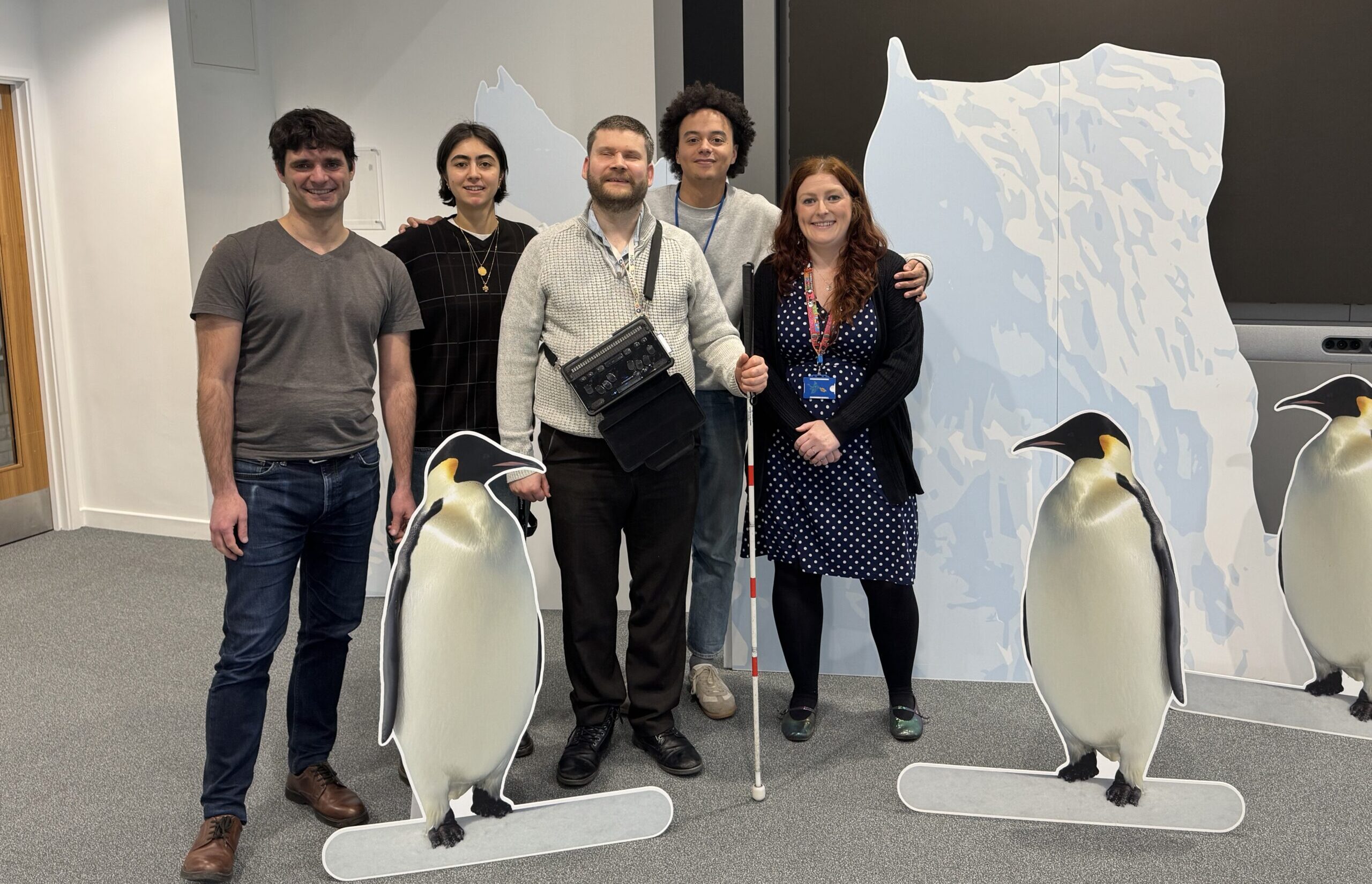
Photo credit: Carbon Literacy trainers at British Antarctic Survey
Since beginning its Carbon Literacy rollout in 2023, The British Antarctic Survey (BAS) has reached many milestones, from a pilot course on the RRS Sir David Attenborough, its polar ship, achieving Bronze Carbon Literate Organisation status in 2023 and developing a bespoke course to ensure Carbon Literacy can be delivered in the field.
Three years since the journey began, they have received the Silver Carbon Literate Organisation accreditation. As well as achieving its target of reaching 250 certified learners and Action Plans by 2025, BAS has seen a number of behavioural changes across departments, as learners found new ways to lower their carbon footprint.
To celebrate this achievement, Net Zero engagement and Support Officer David Wilkins gives a rundown on what this means for BAS and how Carbon Literacy has encouraged its members to reconsider their carbon footprint.
While BAS’s extensive research in Antarctica is used across the globe to highlight the effects of climate change, our challenge is to lower our own carbon footprint while operating in a hostile environment. Transporting scientists to Antarctica and keeping them alive in one of the world’s most extreme environments are energy-intensive. It is important that we both collect research and make sure it’s done in the most carbon-efficient way possible. So, finding a course that highlighted both climate change’s effects and ways to combat it was exactly what we needed to ensure we followed our own science.
To date, 257 learners have been certified as Carbon Literate, having completed individual and group action plans, with 201 certified from BAS. Other learners certified were from external partners who joined in the training, and include the Government of South Georgia, the UK Antarctic Heritage Trust and Polysolar, a solar panel designer based in BAS Cambridge. We’ve seen #an impressive set of initiatives to save Carbon from departments across BAS. For example, the IT department has begun an initiative to discourage the inadvertent use of AI, which has a high energy footprint. Similarly, the intranet now has a dedicated Net Zero hub containing tips to reach Net Zero in IT.
After taking the Carbon Literacy course, Geologist Joanne Johnson amended the funding request for the ‘Rock-ice’ project in Antarctica, to make sure it included a carbon accounting report for its field seasons. As this project involves drilling through ice sheets to collect samples of ice and underlying rock, its energy use will be intense. This is the first time that Carbon Accounting has been considered as part of a funding bid. We aim to make carbon accounting an integral part of all funding bids in the future.
Beatrix Schlarb-Ridley, Director of Innovation, says:
“British Antarctic Survey has always driven innovation in the Polar Regions and in the UK. And it has been excellent to see how this innovation is now being used to lower our whole organisation’s Carbon Footprint. I have been inspired to see Carbon Literacy making such a difference across our organisation. I thank all of our trainers who have given their time and put in the work to make this possible.”
Nopi Exizidou, Head of Net Zero Transition, says:
“Our three-year Carbon Literacy journey has been impressive to watch. Our colleagues have taken on a challenging task to lower our carbon footprint both in Cambridge, at sea and in Antarctica. It’s also been incredible to see how Carbon Literacy is encouraging colleagues to change their behaviour and to reexamine areas where it was hard to see how any changes could be made to begin with. I’m very excited to see what we can do with Carbon Literacy in 2026.”
Grace Henderson, Civil Service Coordinator at The Carbon Literacy Project, says:
“It’s truly impressive to see how the British Antarctic Survey has gone from milestone to milestone; delivering Carbon Literacy in one of the most extreme environments on Earth, translating that into meaningful organisational-wide action and gaining well-earned recognition for its achievements. The BAS story goes to show that no organisation is too complex, remote or specialised to decarbonise, as long as its people are given the right tools.”
Find out more about the BAS’s Carbon Literacy journey, From climate research to climate action: Carbon Literacy at the British Antarctic Survey.