
Our News
Securing the Future of Skiing and Winter Sports
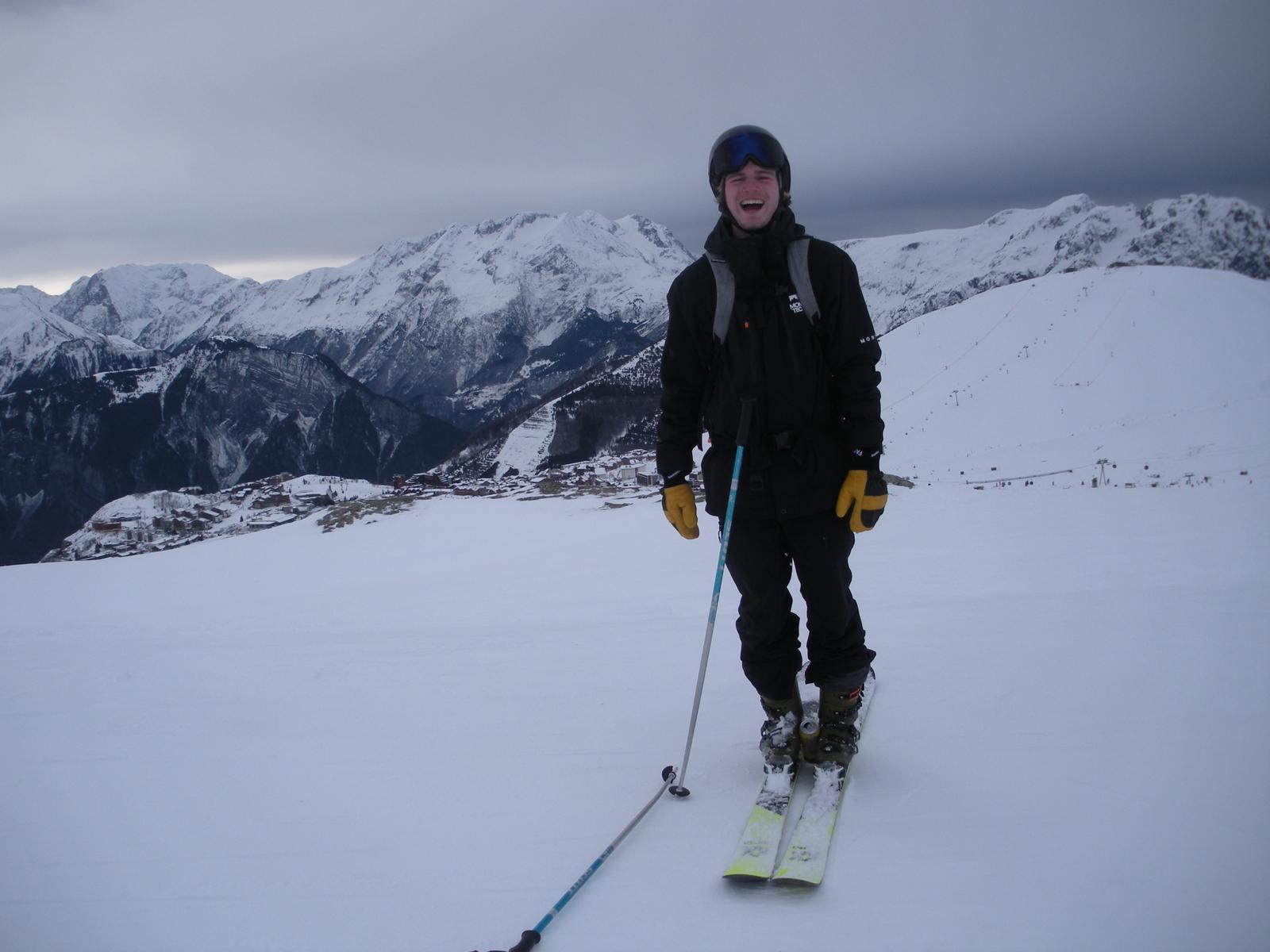
My amateur skiing career started in a nappy in between my dad’s legs at 18 months. During my younger years, the position between my dad’s legs was a staple, and my ski vocabulary consisted of me screaming ‘faster faster’. Fortunately, along the road, I learnt to control myself on skis, but those external commands now exist as an internal monologue.
The privileges associated with skiing
My love for skiing felt normal. I didn’t recognise the privilege of growing up in Switzerland a stone’s throw from the Alps. At the time, skiing was just about fun and adrenaline, but recently I can’t think of skiing without recognising a new paradigm of privilege in winter sports.
Being a professional in the climate sector, I know that climate change impacts are intensified in colder regions. As a skier, I have experienced increasingly unreliable conditions and the dangers that come with that. So, naturally, the thought of what skiing will be in the future and how that will impact my future 18-month-old nappy shredders has crossed my mind.
Last month, when I skied the Vallee Blanche, a famous off-piste glacial ski run in Chamonix, that thought was stronger than ever. The top of the run was bliss; the bottom was terrifying. Plaques which indicated the previous extent of the glacier provided the visual representation of how climate change is already threatening winter sports. The Mer de Glace glacier, which the run is on, has receded over 200m since 2018. At that time, there were 10 steps to get from the bottom of the run to the lift; this year, there were 256.
The reality is that the way we enjoy winter sports now is a privilege. Like the glacier, resorts will recede or cease to exist – unless we act now.
What climate change means for skiing and winter sports
Global warming is making temperatures and snowfall more volatile. In the resorts, adaptation seems to be the preferred way forward. Resorts now have artificial snow cannons dotted about everywhere, because natural snowfall is no longer reliable. However, the energy requirement to convert water to snow makes this a carbon-intensive and costly process.
Take the 2026 Milan-Cortina Olympics as an example. To generate the artificial snow for the competition 948,000m3 of water was needed. That is the equivalent of 379 Olympic-sized pools. The energy usage produced approximately 3000 tCO2e. That is the equivalent of six full planes doing a round trip from London to New York.
Winter sports and mountain communities depend on a stable climate
Looking forward, the statistics for winter sports are bleak. By 2050, it is expected that the number of venues capable of hosting the Winter Olympics and Paralympics will reduce by over half. In Europe, at 2 degrees of warming, 53% of ski resorts are expected not to receive enough snow to operate, which equates to 1200 resorts closing.
It is important to remember that behind the statistics are people. From Scotland to Australia, mountain communities need the economic injection brought by tourism to sustain their livelihoods. I learned to ski in a low-lying resort at risk of shutting down. My cute outdoor baby onesie was bought from a shop in that village. Those who staffed the shops were locals and relied on the seasonal employment to get by.
As temperatures increase and snow isn’t reliable enough for the resorts to stay open, these shops will shut down, and employment opportunities will vanish. The economic withdrawal will lead to decline and threaten global mountain communities’ very existence.
How can we act to protect winter sports and communities?
Step 1. Grow your understanding
For those unaware of the worrying realities facing winter sports, the first step is to grow that understanding. Protect Our Winters UK offers a fantastic Carbon Literacy course exploring how climate change affects outdoor communities and what solutions we have at our disposal. I did the training, and it has certainly reshaped how I think and act for the rest of my life. You can sign up here.
Step 2. Commit to actions to reduce emissions
The next step is to commit to reducing emissions. On average, 52% of emissions from a ski trip come from transport; this figure is amplified if you fly. To combat this, Protect Our Winters UK has started the Clean Miles campaign. By signing it, you give your support as they lobby for better public transport access to the outdoors. You also pledge to try to travel to the mountains more sustainably in the future.
Step 3. Use your voice
Finally, we need to use our voices. Societies have time and again shown the power of their voice and legislative activity to drive change. Voices from the winter-sport community are already calling for climate action. Ahead of this year’s Winter Olympics, a number of athletes, including American freestyle skier Alex Hall, signed a petition urging the International Olympic Committee to end sponsorships with fossil fuel companies. We can emulate this: write to local politicians to demand change, convince those around you to explore more sustainable options, and hold businesses to a higher standard with your consumer capital.
Think about future generations and do your best to ensure that skiing and winter sport as we know it isn’t a privilege of the past but also a privilege for the future. You are an agent for change, and your influence is paramount. Make your decisions count.
Lucas Nabarro is The Carbon Literacy Project’s Sports Coordinator; email him at [email protected] to discuss how Carbon Literacy can support your sports organisation to take climate action.