Our Impact
A global movement for climate action
The climate emergency requires more than ambition and targets. It requires people who are motivated and equipped to act. At The Carbon Literacy Project, we’re building a global movement of Carbon Literate citizens, and our success can be measured by the actions our learners take and the change that follows.
Working alongside over thousands of organisations across every continent, Carbon Literacy® is both a pioneering framework for immediate action and a foundation for systemic change. It helps individuals, organisations, sectors and communities realise their agency, turning climate concern and confusion into practical actions that tackle emissions directly.
What these numbers mean
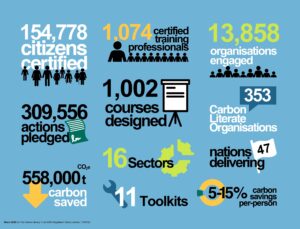
The total number of individuals that have successfully completed their day’s worth of Carbon Literacy learning – gaining their uniquely numbered CL certification.
Each learner must pledge two significant actions – one they can take on their own and one that they will do with a wider group of people – to gain their Carbon Literacy certification. This is why the number of actions pledged is always double the number of certified citizens.
In reality, many learners pledge more than two actions, but for ease of reporting, we only count two per individual.
Learners provide evidence of the carbon saving of the actions they’ve pledged – whether it saves 10’s, 100’s or 1000’s of kg of CO2e. We’ve taken an average of this data, which we’ve collated from over 12,000 of our learners, and extrapolated that to cover the actions pledged by all our certified learners. This figure is our best guess but likely a gross underestimate.
A full report on our methodology for coming to this figure is in the works and we’ll link to it here once it is produced.
We expect the real figure to be much higher than this due to:
- our requirement that actions pledged must be ‘significant’
- multiple actions often being pledged by learners for both the individual and group actions
- a focus on actions being pledged in the sphere the training takes place (often the workplace – where there is the opportunity to influence much greater carbon savings than an individual could in their personal life)
- where more than one of the ’10’s, 100’s, and 1000’s’ is selected, we record the lowest selected
- a number of really high impact actions that we are aware of that are in themselves many thousands of tonnes
- all the additional actions that learners go on to take, over and above their pledged actions, as a result of their newfound knowledge and skills
As such, a more material study looking into the attribution of the carbon saving of actions pledged as part of Carbon Literacy training is something we’d love to undertake. If you feel you’d be able to help us with this research piece to quantify Carbon Literacy’s impact, please Contact Us
Previous research on Carbon Literacy.
For reference: the current average carbon footprint of a UK citizen is 12.7 tonnes CO2e.
The total number of certified Carbon Literacy Training Professionals.
A number of those who are open to external training and course development opportunities can be found on our Trainer Directory.
The total number of accredited Carbon Literacy courses.
These training materials have been through our rigorous criteria checker process and have been deemed to fulfil the requirements of the Carbon Literacy Standard.
A ‘sector’ is officially counted when it reaches a critical mass in one of two ways:
- A recognised sectoral network or professional body adopts and implements a Carbon Literacy course with multiple organisations within the sector.
- There are multiple organisations collaborating to adopt and implement Carbon Literacy within their organisations and across the wider sector.
The number of sectors in which a Carbon Literacy Toolkit has been launched.
The number of organisations with Carbon Literacy certified people.
The total number of organisations that have gained Carbon Literate Organisation (CLO) accreditation.
This is based on organisations achieving the introductory level – Bronze – and takes into account any historical accreditations.
We regularly update a list of our current CLO accreditation holders.
Nations where an accredited programme of Carbon Literacy training has been developed and delivered.
The nations included are:
Antarctica, Australia, Austria, Bahrain, Belgium, Bolivia, British Virgin Islands, Canada, Cayman Islands, Croatia, Denmark, England, France, Germany, Ghana, Greece, Guatemala, Guernsey, Hong Kong SAR, India, Indonesia, Ireland, Italy, Isle of Man, Jersey, Jordan, Kenya, Luxembourg, Mauritius, Mexico, Northern Ireland, Philippines, Pakistan, Portugal, Saudi Arabia, Scotland, Singapore, Slovakia, South Korea, Spain, Sweden, Tanzania, The Netherlands, United Arab Emirates, Uganda, United States of America, Wales
Jacobs UK has found savings of between 5% and 15% to be regularly demonstrated on similar behavioural approaches to Carbon Literacy. The key to all of this is to make sure the approach to governance (accountability, monitoring/reporting systems, regularity to the comms/training) is also addressed to back up and validate behaviour changes (which is done through the Carbon Literate Organisation accreditation). That way the savings are sustained and are not just a short-lived positive change that is lost over time.
“A construction company rolled out an engagement and behaviour change pilot at their head office which achieved a 15% saving in electricity consumption, which was sustained over the subsequent year of monitoring as a result of supporting procedure and systems changes and an ongoing approach to communications. The company went on to roll the approach out at other sites, led by nominated ‘young leaders’ who were coached in delivering the same approach at their home site. These sites – which included offices, depots and combined sites – achieved between 5% and 12% reduction in electricity consumption over the subsequent 3 month period compared with the previous year.”
“The national low carbon schools programme delivered by Jacobs on behalf of the Carbon Trust demonstrated that it is possible to achieve cost and carbon savings of over 10% and in some cases as high as 20%, just through simple no and very low-cost interventions which are engagement-led and promote positive environmental behaviour, and can be supported by everyone in the school.”
How we create change
Carbon Literacy Impact Report 2024
In 2024, The Carbon Literacy Project reached a major milestone as we surpassed 100,000 certified learners, driven by record-breaking growth throughout the year:
- 38,152 citizens certified
- 199 Carbon Literacy courses accredited
- 450+ Carbon Literacy Trainers (CLT) accredited
- 10 new nations delivering
- 137,000 CO₂e saved
- Fourth and biggest Carbon Literacy Action Day held
Past Impact Reports
Our awards
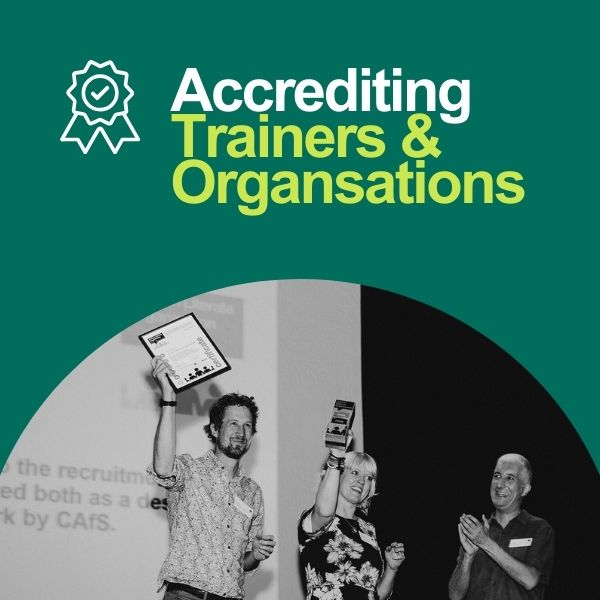
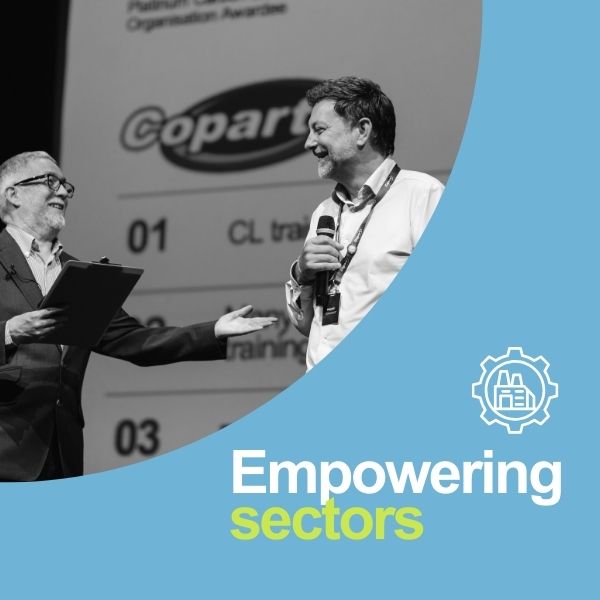
The Carbon Literacy Project is proud to be a multi-award-winning, globally unique initiative, acclaimed for its pioneering approach to climate education. As well as being recognised by the United Nations’ Transformative Action Program (TAP100) at COP21, the Project has been honoured with awards celebrating innovation and impact in driving climate action across sectors, organisations and communities.
"The Carbon Literacy Training has been amazing. It gave me the confidence and knowledge to really make a difference in my community. I'm so grateful for the experience."
Dr Abbas Mohammed Associate Lecturer - Accounting, Economics and Finance Univeristy of Plymouth
"I first got involved with the Carbon Literacy Training for Community Leaders while volunteering as a Climate Ambassador at Plymouth City Council. This programme has been a real game-changer for me. It gave me the tools and confidence to start community projects about environmental awareness and climate issues. The support and resources were brilliant, and I have learned so much. I feel truly empowered to make a positive impact in my community and beyond."
Dr Abbas Mohammed Associate Lecturer - Accounting, Economics and Finance Univeristy of Plymouth
"The ACT Carbon Literacy Training was one of most positive professional development courses I had attended in recent years and was successfully hosted on Microsoft Teams. The CLT was tailored to both my profession and geography meaning a bespoke relevance to me and my role in my organisation. Jamie delivered a relaxed and constructive workshop that resonated with all participants. The CLT has improved my knowledge and understanding of Climate Change and the focussed ‘pledge’ assessment has channelled personal and organisational ambition to be achieved."
Ross MacLaughlin, Head of Commercial Services, Argyll and Bute Council
“It is vital and totally changes what you think and know about the climate emergency. Having the dedicated time to learn was incredibly valuable and something that I have never had time to do in the past.”
Community Leader, Plymouth
“Our Carbon Literacy initiative aims to educate and empower disadvantaged communities in Bradford, particularly the BAME community, on environmental sustainability. By providing comprehensive training to local volunteers and community leaders, we hope to foster sustainable practices, reduce carbon emissions, and improve overall well-being.”
ZA Community Officials
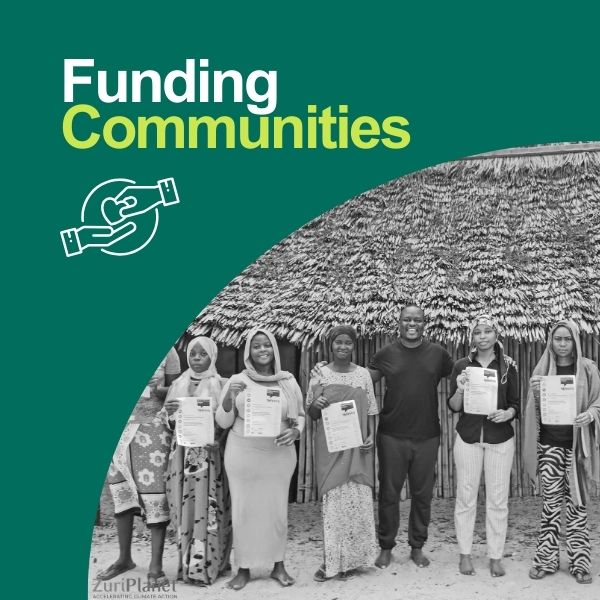
"This funding will support complimentary Carbon Literacy training for economically underserved communities in Kenya, aiming to bridge this knowledge gap. With this support, ZuriPlanet Africa can offer Carbon Literacy training to 190 individuals and cover the costs of course accreditation. This initiative will empower these communities to understand better and address climate challenges, reduce their carbon footprints, and adapt to climate change impacts in one of the world's most vulnerable regions.”
Michael B. Esilaba, Executive Director, ZuriPlanet Africa LTD