
Our News
Reflections on Carbon Literacy Action Day 2025
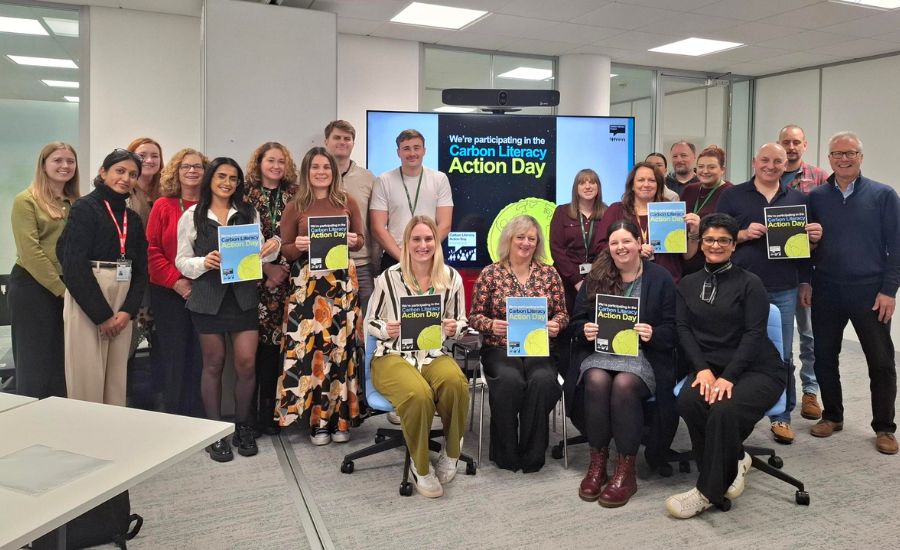
Our quarterly series spotlighting the work of our certified Carbon Literacy Consultants sheds light on how the most experienced Carbon Literacy trainers, certified at the highest level of our Trainer Certification Scheme, have created a lasting impact through Carbon Literacy. In this blog, we hear from Georgina Patel.
I was surprised and delighted to receive the first ever Trainer Catalyst Award from The Carbon Literacy Project for CLAD 2025. Looking back on the four training sessions I delivered, what stands out most isn’t the award itself, but the people who took part. My sessions were full-on days: busy and intensive sessions, but the questions, discussions and challenges raised by participants made them interesting and enjoyable to run.
As an independent Carbon Literacy Consultant, I worked with five UK-based and nine international organisations during CLAD 2025, bringing together people from a range of sectors and backgrounds.
I’ve delivered Carbon Literacy training for quite a few years now, and one thing I’ve learned is that no two groups are ever the same. Some people show up with a strong understanding of climate change and sustainability, while others are new or confused about the subject – that’s what makes it so interesting.
What I love most is seeing people make the connection between the global climate challenge and their own role – it’s the moment they realise they don’t need to change the world on their own, they simply need to understand where they can make difference, however big or small that might be.
There’s also something special about Carbon Literacy Action Day itself. Knowing that thousands of people are having similar conversations across different sectors, organisations and countries at the same time gives the whole event a very different feeling. It’s a reminder that climate action isn’t happening in isolated pockets; people everywhere are learning, questioning and looking for practical ways to make a difference.
The power of collaboration
The theme of CLAD 2025 was collaboration. In my sessions, whether participants worked in social housing, government agencies or international organisations, the message was similar: we achieve far more when we work together than when we work alone.
What was particularly encouraging was hearing how people planned to continue the conversation after the training. Social housing colleagues talked about sharing ideas and examples of good practice through LinkedIn and sector networks. Senior leaders in Uganda committed to continuing discussions through Climate Hub International. Participants from the Driver & Vehicle Standards Agency explored ways to build on their learning through their Eco-Innovators group.
One particularly memorable part of CLAD was working with Climate Hub International to deliver training for senior leaders in Uganda, including members of the Office of the Prime Minister and the Parliamentary Forum on Climate Change. The session brought together people with the potential to influence climate action at a leadership and policy level, giving them space to discuss their ambitions, the support they needed and opportunities to work together.
For me, that’s where Carbon Literacy really comes into its own; the training day is important, but it’s only the starting point, the real value comes afterwards, in the conversations people have, the decisions they influence and the actions they take at home, in their organisations and communities.
What I’ve learned as a trainer
Receiving the CLAD Trainer Catalyst Award also made me reflect on what helps to make a Carbon Literacy session successful. If I had one piece of advice for new trainers, it would be this: don’t feel you need to have all the answers. Some of the best discussions happen when participants bring their own experiences, ideas and even frustrations to the conversation. As trainers, we’re there to guide learning, not dominate it. I’ve also found that people engage far more with stories than statistics – don’t get me wrong, the science matters but what people often remember are the examples, case studies and real-life experiences that help bring the subject to life.
Another thing I’ve learned is not to underestimate people. Climate change can feel overwhelming, and there’s often an assumption that people don’t want to hear about it. My experience has usually been the opposite. When you create a safe space for discussion and focus on practical action rather than doom and gloom, people are often incredibly engaged. Some of the most creative ideas I’ve heard during Carbon Literacy training have come from learners themselves.
Also, never underestimate the value of making the content relevant, people don’t need another generic conversation about saving the planet, they need help understanding what climate action means in their role, their team and their organisation.
When that connection is made, that’s when the magic happens!
Taking part in CLAD
One of the things I enjoy most about CLAD is that, as trainers, we learn just as much as participants. Every session introduces me to new ideas, new points of view and examples of fantastic work happening across different sectors. I’ve lost count of the number of practical tips, projects and approaches I’ve taken away from conversations with participants.
The real strength of the Carbon Literacy community is that people are incredibly generous with their knowledge and experiences, and there’s a genuine willingness to support each other.
Thinking About CLAD 2026?
If you’re delivering a session as part of Carbon Literacy Action Day 2026, here are a few things I’ve learned along the way:
- You don’t need a perfect slide deck.
- You don’t need years of experience.
- And you certainly don’t need to be a climate expert who knows every answer to every question.
What matters is creating an environment where people can learn, discuss and create solutions together. Some of the best discussions I’ve heard have come from groups with very different backgrounds and experiences.
Most importantly, focus on the conversations, not just the content as people may forget statistics and graphs, but they’ll remember a discussion that challenged their thinking or an idea that inspired them to take action.
Recognising the people behind Carbon Literacy
The reason I love delivering Carbon Literacy training is that every session reminds me that people genuinely want to be part of the solution – they just need the opportunity, the knowledge and the confidence to get started.
The CLAD Catalyst Award celebrates impactful and catalytic Carbon Literacy training, and the individuals and organisations helping to bring others on the journey.
If you’re taking part in CLAD 2026, I’d encourage you to consider applying for this year’s Catalyst Awards. It’s a chance to share what you’ve been working on and inspire others across the Carbon Literacy community.
I’m already looking forward to CLAD 2026 and meeting even more brilliant groups of people who care enough to spend time learning, questioning and thinking about what they can do next. For me, that’s what makes it such a worthwhile event to be part of.