Our News
The Impact of Carbon Literacy for School Staff
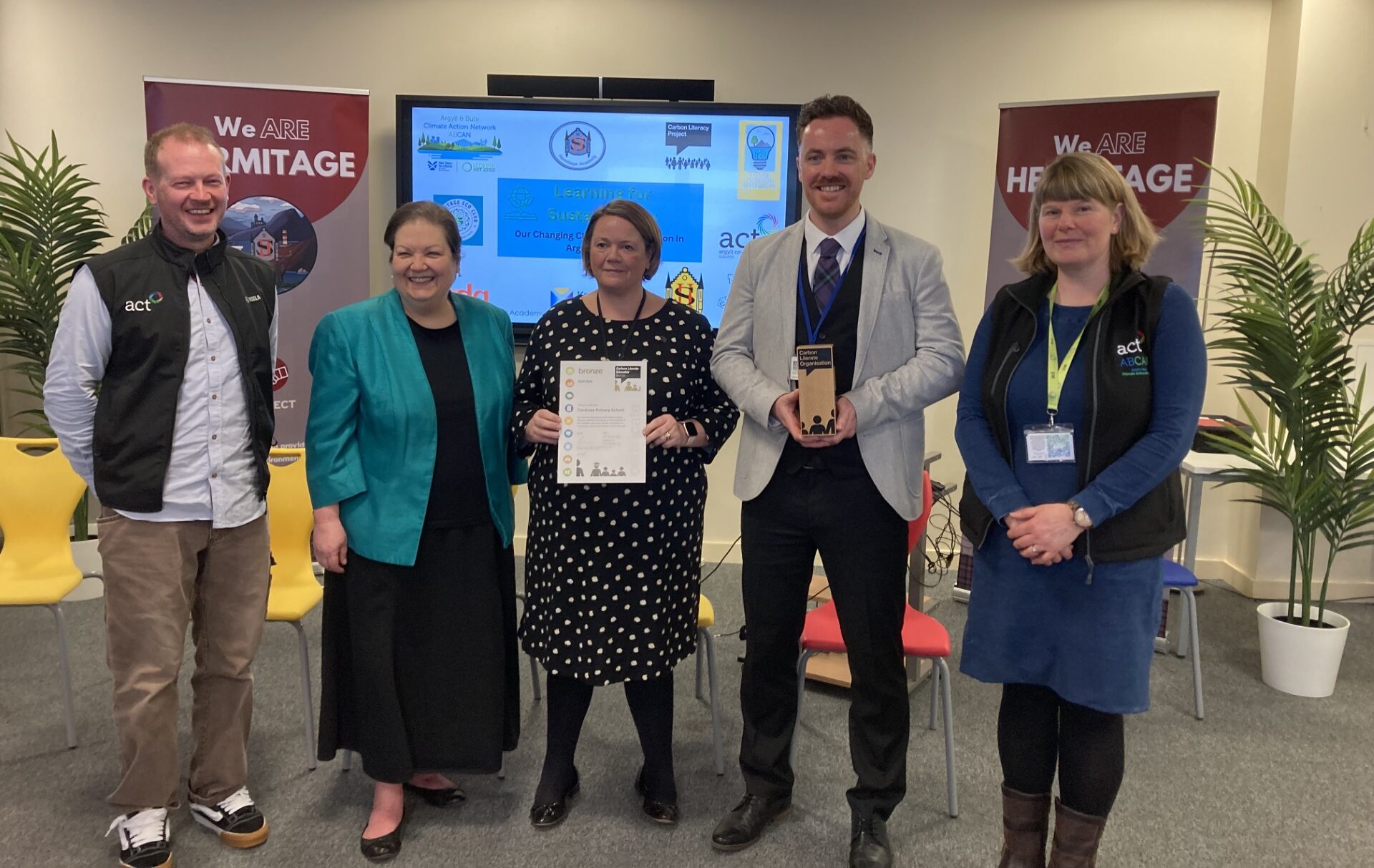
Image credit: Cardross Primary School
A year ago, we launched the Carbon Literacy School Staff Course with the goal of giving schools a practical way to build sustainability knowledge among their staff, empower and build climate confidence, and deliver genuine, measurable reduction in emissions. In this blog, we explore how the School Staff Course has been used, what impact it has had already, and what comes next for the School sector.
One Year On
The Carbon Literacy School Staff Course in numbers so far:
- 11 organisations have delivered the course
- 100 learners certified
- A further 67 organisations have access and are planning to run training in the next academic year
- The world’s first Primary and Secondary Schools were accredited as Carbon Literate Educators
- The course has inspired similar programmes and has been adapted in two other countries
Zoom out to the wider school sector, and the picture is bigger still: over 4,000 learners have now completed Carbon Literacy training, thanks to the many organisations working to support schools on their sustainability journey, adapting the School Staff Course to fit their own context and, in doing so, inspiring genuine change. This contributes to the wider education sector total of over 37,000 certified learners across the world.
Jamie Joyce, Carbon Literacy Consultant and Climate Change Project Manager at Argyll Countryside Trust, who supported Cardross Primary School’s Carbon Literate Educator journey, commented:
“The Carbon Literacy Toolkit for School Staff is a hugely valuable resource and one we plan on using regularly. Fundamentally it ensures all school staff can feel seen and recognised with a resource designed to meet their unique needs.
The materials within the training are highly relevant, localised to context and area, and as a trainer, were a joy to deliver. I feel that the schools across the country will benefit greatly from this toolkit.”
Hear about the impact of Carbon Literacy on accredited Carbon Literate Educator, Cardross Primary School.
The Impact for Schools
We are seeing rapid change in schools – and some genuinely impactful individual and group actions, such as:
- The pledge to hold a climate cafe regularly for pupils at a secondary school
- The primary school children who are developing their agency to make their voices heard
- The teachers who have reduced printing drastically in school
- The business managers moving towards renewable energy sources.
We’ve heard from schools experiencing first-hand that, as we know, so much of what reduces our carbon emissions improves so many other areas of school life – creating or maintaining nature parks, reducing school waste, building confidence and creating community.
Pupils Course Coming Soon
This is far from finished. The next step is a pupil-facing Carbon Literacy course, launching very soon thanks to support from Axtec Group, alongside further work to develop pupil courses that can support learners in all contexts and settings. We’re focusing on maximising accessibility, tackling climate anxiety, and giving young people a confident and informed voice.
Thank You
We know how important it is that our young people are informed and supported to face the future. But we recognise the challenges that schools face in putting sustainability issues and Carbon Literacy into an already packed school curriculum and school calendar. We congratulate the pioneering schools that have utilised the Carbon Literacy School Staff Course and that are already realising the benefits a Carbon Literate culture creates.
We are also incredibly grateful to those organisations that have worked to develop their own courses and build Carbon Literacy into offerings for schools that develop a rounded approach to climate education and sustainability.
We’re looking forward to watching what this sector can achieve next year!
If you want to get involved, or take a look at our Schools sector page or email [email protected].